Zion National Park Without Hiking: Scenic Stops, Short Walks and Winter Access
You can enjoy Zion without hiking. The low-walking stops, the scenic drive and highway, winter car access dates, accessibility and which Las Vegas tours suit non-hikers.
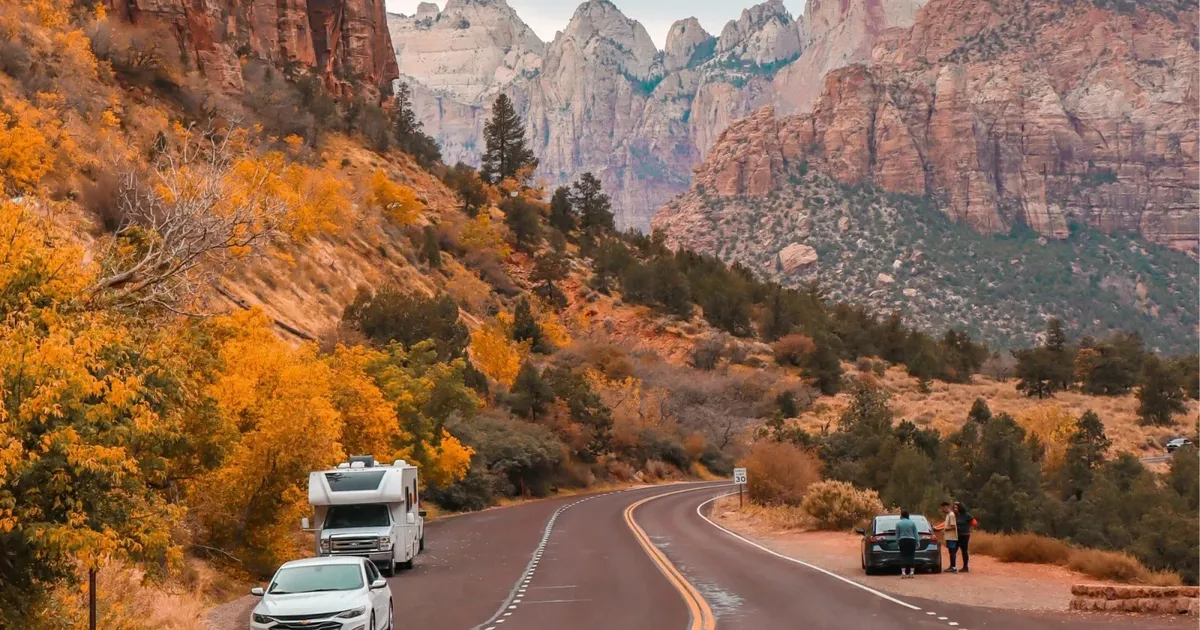
Yes, you can enjoy Zion National Park without a real hike. Most of what makes Zion memorable is visible from its roads, shuttle stops and visitor areas: red cliffs thousands of feet high, the Virgin River and the switchbacks up to the Zion–Mount Carmel Tunnel. For the least walking, stick to the Zion Canyon Visitor Center, Court of the Patriarchs, Zion Lodge, Temple of Sinawava and the pullouts on the Zion–Mount Carmel Highway, and add a few minutes of the paved Pa’rus Trail or Riverside Walk if you feel like it. Don’t treat the Canyon Overlook Trail as a drive-up viewpoint: it’s a one-mile round trip with steps and uneven rock.
Check Availability
In winter, when the canyon shuttle isn’t running, you can also drive your own car up Zion Canyon Scenic Drive, subject to road conditions and parking. Keep three things apart as you plan: no hiking, minimal walking and wheelchair-accessible sightseeing. A viewpoint that looks easy on a map can still involve stairs, an uneven path or a walk from a distant parking spot.
Can you see Zion without hiking?
Yes. You don’t need to climb Angels Landing, wade the Narrows or spend a day on a trail. From the valley floor you look straight up at sandstone cliffs above the river and cottonwood trees, and on a sunny winter day snow sometimes outlines the high ridges.
If you want almost no walking, plan a drive or a shuttle ride with short stops. If 10–30 minutes of easy walking is comfortable, you can add the riverside paths. If you use a wheelchair, a mobility aid or a stroller, check the National Park Service’s current accessibility guidance for each place, because a paved route isn’t automatically an accessible one.
The best Zion sights with little or no hiking
| Stop | What you see | Walking involved | How to get there |
|---|---|---|---|
| Zion Canyon Visitor Center | Towers of the Virgin, nearby cliffs, park orientation | Minimal around the buildings and plaza | Car, park shuttle or guided tour |
| Court of the Patriarchs | Three sandstone peaks named Abraham, Isaac and Jacob | View from the stop; optional short uphill path to a viewpoint | Canyon shuttle, or your own car when the shuttle isn’t running |
| Zion Lodge area | Huge canyon walls, lawns, cottonwoods | Short level walks around the lodge, as far as you like | Canyon shuttle, or your own car when the shuttle isn’t running |
| Temple of Sinawava | High canyon walls at the end of the scenic road | Short stop by the parking and shuttle area; optional Riverside Walk | Canyon shuttle, or your own car when the shuttle isn’t running |
| Zion–Mount Carmel Highway | Switchbacks, cliff faces, the tunnel and the slickrock east side | Views from the vehicle and designated pullouts | Your own car or a tour vehicle |
| Pa’rus Trail | Virgin River and Watchman views | Optional paved out-and-back | From the Visitor Center or Canyon Junction |
| Kolob Canyons Scenic Drive | Red cliffs in a quieter, separate part of Zion | Roadside sightseeing, conditions permitting | Car only; check winter road status |
Important: car access to Zion Canyon Scenic Drive follows the shuttle schedule, and you may park only in designated spaces. Roads and pullouts can close for ice, snow, congestion or full parking areas.
1. Zion Canyon Visitor Center and the Towers of the Virgin
The visitor center is the easiest first stop. You can see the canyon from the plaza, use the restrooms, check conditions and ask a ranger which roads and stops are open that day. It’s also where you board the Zion Canyon shuttle when it runs.
Allow about 20–40 minutes to get your bearings, look around and take photos. Parking, lines and the exhibits can stretch that.
2. Court of the Patriarchs
This is one of Zion’s classic stops. The three peaks named Abraham, Isaac and Jacob rise above the canyon, and you can see them well from beside the road. A short uphill path leads to a more open view.
Good for: anyone who wants one memorable canyon view without a hike. If slopes are hard for you, skip the uphill path; it isn’t an accessible trail.
3. Zion Lodge and its surroundings
The lodge is a good place for a rest halfway through the canyon. The lawns face the canyon walls, and you choose how far to stroll. Food and facility hours change by season, so check what’s open on your date instead of going by summer hours.
Good for: mixed-age groups and anyone who wants frequent breaks. If you’re staying overnight at the lodge during shuttle season, different vehicle rules apply from an ordinary day visit.
4. Temple of Sinawava
At the northern end of Zion Canyon Scenic Drive, this stop puts you beneath tall, close canyon walls. You don’t have to walk the whole Riverside Walk to feel the place. If conditions and energy allow, walk a short section of the riverside path and turn around.
The Riverside Walk is paved, but it can have sandy, icy or uneven patches, and parts are harder going than the name suggests, especially in winter. Don’t continue from its end into the Narrows river hike unless you have the right gear, experience and safe conditions.
5. Zion–Mount Carmel Highway and the tunnel
For scenery from the car seat, this is one of the best choices. State Route 9 climbs out of the canyon through tight switchbacks and the Zion–Mount Carmel Tunnel to the park’s east side, and the rock changes color and shape as you gain height.
Stop at designated pullouts only. Don’t pull over on the switchbacks, block traffic or park where there’s no legal space. Snow and ice can occasionally close the highway, and vehicle-size limits apply, including the large-vehicle rules introduced in 2026.
Don’t confuse the highway with the Canyon Overlook Trail. The view at the end of that trail is beautiful, but reaching it takes a roughly one-mile round-trip walk over steps and uneven rock, with some exposed sections. It is not a no-walking stop.
6. Pa’rus Trail, an optional easy add-on
Pa’rus is a paved path beside the Virgin River between the visitor center and Canyon Junction, with good views of the Watchman. You don’t need to walk it all: go for five or ten minutes, look at the river and turn back. The park says wheelchairs can use it with assistance and counts it among the trails that are wheelchair-friendly at the visitor’s own discretion.
It suits anyone who wants gentle walking instead of hiking. In winter, look for ice on the surface before you set off. If you’d like a little more walking, our guide to easy Zion winter hikes adds the Riverside Walk and Lower Emerald Pool.
7. Kolob Canyons: beautiful, but a separate entrance
Kolob Canyons is part of Zion National Park, but its entrance is off Interstate 15, away from Springdale and the main canyon. The scenic road there gives you red-rock views without a long hike.
It isn’t a casual add-on to a short Zion day trip: getting there changes your route and adds time, and the road sometimes closes in winter weather. Consider it if your route passes the northern part of the park or you have a second day.
Can you drive through Zion National Park in winter?
Often, yes, but the dates matter. During the main shuttle season, private vehicles can’t drive Zion Canyon Scenic Drive north of Canyon Junction. Our guide to the winter scenic drive route and parking has the stops and dates. When the shuttle isn’t running, the scenic road usually opens to private cars, although rangers can close it for a while when parking fills or the road is unsafe.
The National Park Service schedule for the 2026–27 winter:
- Through November 28, 2026: the regular fall Zion Canyon shuttle runs, and private cars can’t use the Scenic Drive.
- November 29–December 25, 2026: no Zion Canyon shuttle, so you can usually drive the Scenic Drive when conditions allow.
- December 26, 2026–January 2, 2027: holiday shuttle service, and ordinary private vehicles can’t use the Scenic Drive.
- From January 3, 2027: no shuttle is expected until spring, but the park hasn’t announced it yet, so check the latest schedule and park alerts before you count on driving in.
Our winter shuttle dates page keeps this schedule up to date. You can normally drive the Zion–Mount Carmel Highway even in shuttle season, subject to closures and vehicle limits. Winter storms change roads quickly, so check Zion’s current conditions and the official shuttle schedule close to your departure.
Is driving the scenic road the same as seeing the whole park?
No. Zion is much bigger than its main canyon, and the scenic drive and highway don’t reach every overlook or the backcountry. For someone with one day and no interest in hiking, though, they’re usually the most satisfying use of the time.
A low-walking Zion itinerary from Las Vegas
This is a sample self-drive route, not a timed tour. The drive from Las Vegas to Zion takes about 2.5–3 hours each way in normal conditions, and Utah is one hour ahead of Las Vegas all year, winter included. Add time for fuel, stops, traffic, the entrance line and any icy-road delays.
Option A: a winter day when private cars can drive the Scenic Drive
- Leave Las Vegas early. Aim to reach the Springdale entrance with plenty of daylight left; winter afternoons are short.
- Visitor Center (20–40 minutes). Check conditions and photograph the cliffs around you.
- Court of the Patriarchs (10–20 minutes). Look from the stop, and take the viewpoint path only if you’re comfortable on slopes.
- Zion Lodge area (20–45 minutes). Take in the scenery and a break; check which facilities are open before you go.
- Temple of Sinawava (15–30 minutes). See the upper canyon without committing to the whole Riverside Walk.
- Zion–Mount Carmel Highway (if time allows). Drive toward the tunnel and the east side, using legal pullouts.
- Head back before you’re tired. You still have a long drive to Las Vegas, and you gain the hour back on the way.
If rangers close the Scenic Drive because parking is full or the road gets icy, spend your time at the Visitor Center and on State Route 9 instead. Don’t plan around getting into every stop.
Option B: a day when Zion’s shuttle is running
Park at the visitor center or in Springdale, then take the free park shuttle into the canyon. You can get off at any open stop, look around and catch the next bus. Budget for the ride itself: the shuttle takes about 45 minutes one way from the visitor center to Temple of Sinawava, before any lines or stops.
The shuttle makes a no-hike day straightforward, but you’ll still board buses, walk between stops and wait outdoors. A regular tour van can’t drive its passengers up the Scenic Drive during shuttle season.
Guided tour or self-drive for non-hikers?
| Question | Guided tour from Las Vegas | Self-drive |
|---|---|---|
| Who handles the long drive? | The driver-guide | You |
| Can you control how much you walk? | Only on a flexible or private itinerary | Usually yes |
| Is entry to Zion Canyon guaranteed? | No; park restrictions still apply | No; park restrictions still apply |
| Can you choose every stop? | Depends on the tour | Yes, subject to access and parking |
| Suits | Travelers avoiding a long drive, or booking a scenic or private itinerary | Travelers who want full flexibility and can drive safely in winter |
A warning about this site’s featured small-group tour: the Las Vegas: Zion National Park Small Group Tour with Lunch (from $148, 4.8/5 from 114 reviews) includes the Canyon Overlook Trail and the Riverside Walk, and you spend close to three hours on foot in the park. It suits walkers. If you want to avoid hiking entirely, it is not the right tour; read the itinerary first, or ask the operator whether you can wait at the van or skip a walk.
If you want less walking on a group tour, the Bryce and Zion scenic day (4.7/5 from 1,229 reviews) is mostly viewpoints, but it gives Zion only about 40 minutes, a photo stop and the Visitor Center, against about 90 minutes at Bryce Canyon. A private tour lets you set the pace and the stops; our private tours guide covers those. Compare the formats in our Zion tours from Las Vegas guide, and confirm the walking, vehicle type, park access and cancellation terms with the operator before you book.
Is Zion worth visiting if you can’t walk far?
For many visitors, yes. You see the scale of the canyon from the roads and visitor areas, and a relaxed day feels worthwhile without finishing a trail. The trade-off is that a day in Zion is less predictable than a city sightseeing day, because of the natural terrain, the winter weather and the shuttle and parking rules.
If you use a wheelchair or mobility aid, know that the National Park Service says none of Zion’s trails are considered ADA-accessible by law, because of the natural terrain. It lists Pa’rus and the Riverside Walk as wheelchair-friendly at the visitor’s own discretion, and wheelchair users may need assistance on parts of them. The park doesn’t lend standard wheelchairs, but an all-terrain wheelchair is available on loan at the Zion Canyon Visitor Center. Read the official accessibility page, which also covers the Visitor Center, restrooms and shuttles, before you choose stops or a tour.
Winter tips for a sightseeing-first visit
- Put daylight first. The cliffs cast long shadows, and a late arrival cuts the time you have for stops.
- Take ice seriously. Even paved paths can be slippery, especially in the shaded upper canyon.
- Bring warm layers. The shaded upper canyon can feel much colder than the sunny plaza at the visitor center.
- Don’t count on every pullout. Parking is limited, and snow clearing or congestion can close some.
- Carry water and snacks. Winter facility hours are shorter, and you can be far from a shop.
- Ask what the walking on a tour actually is. Words like scenic tour, easy and sightseeing don’t promise zero hiking.
- Check fees before you book. Entry fees and the $100 per-person surcharge for non-US residents affect the total; see our Zion entrance fee guide.
Zion without hiking: the bottom line
Zion is well worth a visit even if you don’t want to hike. The most reliable no-hike day combines the Visitor Center, the canyon-floor viewpoints, the Zion–Mount Carmel Highway and, when access allows, stops along Zion Canyon Scenic Drive. Short stretches of the Pa’rus Trail or the Riverside Walk are there if you want to stretch your legs.
Coming from Las Vegas, check whether a tour’s day is spent at viewpoints or on trails, because that matters more than which tour is cheapest. Start with our Zion tours from Las Vegas guide and confirm the walking before you book.
Frequently asked questions
Can you see Zion National Park from your car?
Yes. The Zion–Mount Carmel Highway has outstanding scenery from the road, and when the canyon shuttle isn’t running you can usually drive Zion Canyon Scenic Drive too, subject to weather, parking and park restrictions.
Do you have to hike to see the best views in Zion?
No. The roads, shuttle stops and the area around the visitor center have memorable views. The famous high panoramas, such as Canyon Overlook or Angels Landing, do need walking, so no drive-up viewpoint replaces them.
Can I visit Zion without taking the shuttle?
Yes, if you stick to the roads open to private vehicles, or visit when the shuttle isn’t running and the Scenic Drive is open. During shuttle season, ordinary private cars can’t use Zion Canyon Scenic Drive.
Is Zion better than Bryce Canyon for non-hikers?
Both work. At Zion you look up at canyon walls; at Bryce Canyon you look down into amphitheaters from viewpoints near the rim, which suits sightseeing-first visitors. Bryce is higher and often colder or snowier in winter. We compare the two in our Zion vs Bryce Canyon guide.
Is the Canyon Overlook Trail an easy drive-up stop?
No. You reach the trailhead by road, but the overlook itself takes about a mile of round-trip walking on uneven ground, with steps and exposed sections. It may not suit a no-hiking day, especially when it’s icy.
Can seniors enjoy Zion without hiking?
Yes, as long as the plan matches each person’s mobility, stamina and health. Choose short scenic stops, build in breaks and check whether a guided tour expects passengers to walk the trails. Age alone doesn’t decide what’s suitable.
Is Zion wheelchair accessible?
Partly. No Zion trail is considered ADA-accessible by law, but the park lists the paved Pa’rus Trail and Riverside Walk as wheelchair-friendly at your own discretion, with assistance on some sections. An all-terrain wheelchair is available on loan at the Zion Canyon Visitor Center.
Can I do a no-hiking Zion day trip from Las Vegas in December or January?
Yes, weather and access permitting. Both months suit scenic drives and short stops, but the holiday shuttle from December 26 to January 2 closes Zion Canyon Scenic Drive to private cars. The round trip is long, so start early and keep the plan short. Our December and January guides have the dates for each month.
See Zion Without Driving 320 Miles Yourself
Hotel pickup on the Strip, a small group capped at 13, two trails and lunch in the canyon. Free cancellation up to 24 hours before departure.
Check Availability & Book